
Theodor Ziehen, M.D., Ph.D., 1862–1950
Theodor Ziehen belongs among the great universal thinkers of the end of the nineteenth century and the twentieth century. Unfortunately, his accomplishments have largely been forgotten, although contemporaries compared him to Einstein and Leibniz.
In 1862, Ziehen was born the son of a Protestant theologian and philologist in Frankfurt am Main, Germany. He studied medicine in Würzburg and Berlin. After leaving his position as medical assistant under Kahlbaum in Görlitz and at the Psychiatric Clinic in Jena, led by Otto Binswanger, he assumed a full professorship in psychiatry in Utrecht, the Netherlands, in 1900, moving then to Halle in 1903 and Berlin in 1904. Ziehen’s philosophical pursuits increasingly conflicted with his demanding position as clinic director, and in 1912, he resigned his directorship. In 1917, he assumed a full professorship at the University of Halle for a second time, this time in philosophy, including an appointment as deputy director of psychology. Ziehen died in Wiesbaden in 1950 (1, 2).
Ziehen was a well-rounded and prolific scholar with 445 publications to his name in the areas of brain anatomy, brain physiology, neurology, psychiatry, child psychiatry, psychology, philosophy, special education, and education. His contribution as a neurologist is best remembered in the naming of genetic torsion dystonia, which is also called Ziehen-Oppenheim syndrome. Ziehen’s textbook Psychiatry, which appeared in four editions between 1894 and 1911, was his most influential psychiatric publication (3). In it Ziehen applied association psychology to clinical psychiatry and developed his own classification of psychoses. Ziehen’s classification system has more in common with Wernicke’s psychopathological system than Kraepelin’s etiologically determined one. Nevertheless, Ziehen and Kraepelin maintained a reciprocal professional relationship. On the one hand, Ziehen’s work influenced Kraepelin; on the other hand, Ziehen—due to his position as holder of the most prominent chair of psychiatry in Germany—seems to have contributed to the breakthrough of the Kraepelin theory (4). With the textbook, Mental Diseases of Childhood, which appeared in three sections between 1902 and 1906, Ziehen created the first systematic work on child psychiatry in German.
Ziehen was an advocate of association psychology, and psychology provided the basis for his philosophical pursuits. Ziehen opposed Wundt and his theory of voluntary apperceptionism. Within the boundaries of his “psychophysiological epistemology,” Ziehen founded the “binomistic” principle. All in all, he advocated the philosophical position of a monistic positivism that he called the principle of immanence. Ziehen developed a complicated theory based on the philosophical foundation of Mach and Avenarius that found a deep resonance in the philosophical community. His philosophical approach was marked by realism, objectivism, and absolute intellectualism, and his idealistic cognitive theory opposed the growing influence of materialism, developed in the nineteenth century, on the natural sciences. This led to massive attacks, especially from Marxists such as Lenin.
Address reprint requests to Dr. Gerhard, Department of Child and Adolescent Psychiatry, University of Jena, Philosophenweg 3-5, D-07740 Jena, Germany; [email protected] (e-mail). Photograph courtesy of Dr. Gerhard.
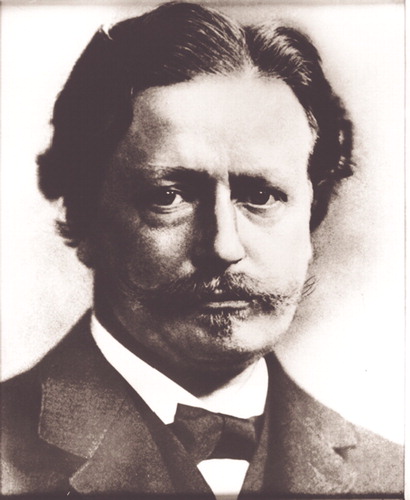
Theodor Ziehen
1. Zusne L (ed): Biographical Dictionary of Psychology. Westport, Conn, Greenwood Press, 1984, p 478Google Scholar
2. Ziehen T: A History of Psychology in Autobiography, vol 1. Edited by Murchison C. Worcester, Mass, Clark University Press, 1930, pp 471–489Google Scholar
3. Ziehen T: Psychiatrie. Berlin, Wreden, 1894Google Scholar
4. Meyer A: A few trends in modern psychiatry. Psychol Bull 1904; 1:217–240Crossref, Google Scholar