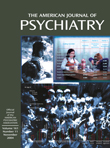
Pliny Earle, M.D., 1809–1892
Pliny Earle, a founder of the Association of Medical Superintendents of American Institutions for the Insane, now the American Psychiatric Association, was a descendant of six generations of New England Quakers. After his own schooling, he became a teacher and then principal of the Friends’ School in Providence, R.I.
Earle entered medicine by studying first with a local practitioner and then at the University of Pennsylvania (he received his M.D. degree in 1837). With the help of a private grant from an affluent fellow Friend, he spent 2 formative years in Europe, one in the medical school and hospitals of Paris and the other touring from England to Turkey and visiting institutions caring for the insane. He published his observations in a booklet, “A Visit to Thirteen Asylums for the Insane in Europe.” Two later trips to Europe, spent visiting and revisiting the physicians and asylums, produced additional publications. These multiple observations of the best and the worst of care for the insane shaped his own organization and administration of the variety of institutions where he served.
After his return from his initial trip, Earle practiced in Philadelphia, where he became resident physician of the Friends’ Asylum for the Insane. In 1844 he was appointed medical superintendent of the Bloomingdale Asylum in New York (now the Westchester Division of the New York-Presbyterian Hospital). He resigned in 1855, perhaps suffering from depression, and returned to New England to recuperate. During the Civil War, he spent two extensive periods caring for army and navy personnel at the Government Hospital for the Insane near Washington, D.C. (later St. Elizabeths Hospital). Appointed superintendent of the State Lunatic Hospital at Northampton, Mass., in 1864, he served there for more than 21 years.
His hospitals were run efficiently and systematically, with little loss or waste. His patients received the best of “moral treatment”: conservative management, few restraints, work, schooling, and entertainment. His lectures to patients covered many topics and included a series on the nature of mental illness, the first known instance of psychoeducation! Earle was a strong advocate of aftercare, including the establishment of halfway houses. Known as an outstanding teacher, he taught at Columbia’s College of Physicians and Surgeons and at Berkshire Medical Institute in Pittsfield, Mass., where he was the first (ever) Professor of Psychological Medicine. Psychological medicine became a required subject at the Berkshire Medical Institute.
He was a careful observer, a tabulator, and a classifier: the first to note that the curability of the insane was vastly overstated by confusing episodes with individuals (a patient with recurrent illness had been counted as six “cures”). His annual hospital reports were models for the profession. Earle was known for “executive force,… mastery of details,…practical wisdom,…and…personal integrity.” He was an acquaintance of the younger Pinel and Esquirol and a friend of Tuke (of the York Retreat), Oliver Wendell Holmes, Sr., and Dorothea Dix. He was ahead of his times, enlightened, and a force for good. He deserves to be remembered for his impact on our field.
The most available source of information about Pliny Earle is a volume of his memoirs edited and published shortly after his death (1). It contains autobiographical material as well as the editor’s biography, extracts from letters, bits of his poetry (doggerel), a list of his many publications as well as some selections from them, and a copy of his “last will.”
Address reprint requests to Dr. Frosch, Department of Psychiatry, New York Hospital and Cornell University Medical College, 525 East 68th St., Box 171, New York, NY 10021; [email protected] (e-mail). Photograph courtesy of the Oskar Diethelm Library, Institute for the History of Psychiatry, Department of Psychiatry, Weill Medical College of Cornell University.

Pliny Earle
1. Earle P: Memoirs of Pliny Earle, MD (1898). Edited by Sanborn FB. New York, Arno Press, 1973Google Scholar